EV Battery

IoT-Based Electric Vehicle Battery Monitoring with GPS Tracking

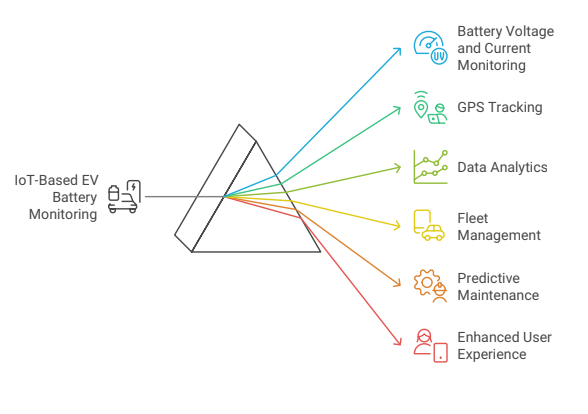
OverviewTo ensure efficient operation and management of Electric Vehicles (EVs), a robust IoT-based monitoring system isessential. This case study focuses on integrating battery voltage and current monitoring, GPS tracking, and dataanalytics to enhance safety, optimize performance, and provide real-time location insights.

Combining thesefeatures enables better fleet management, predictive maintenance, and enhanced user experience.
Image

Challenges in EV Battery Monitoring and Tracking

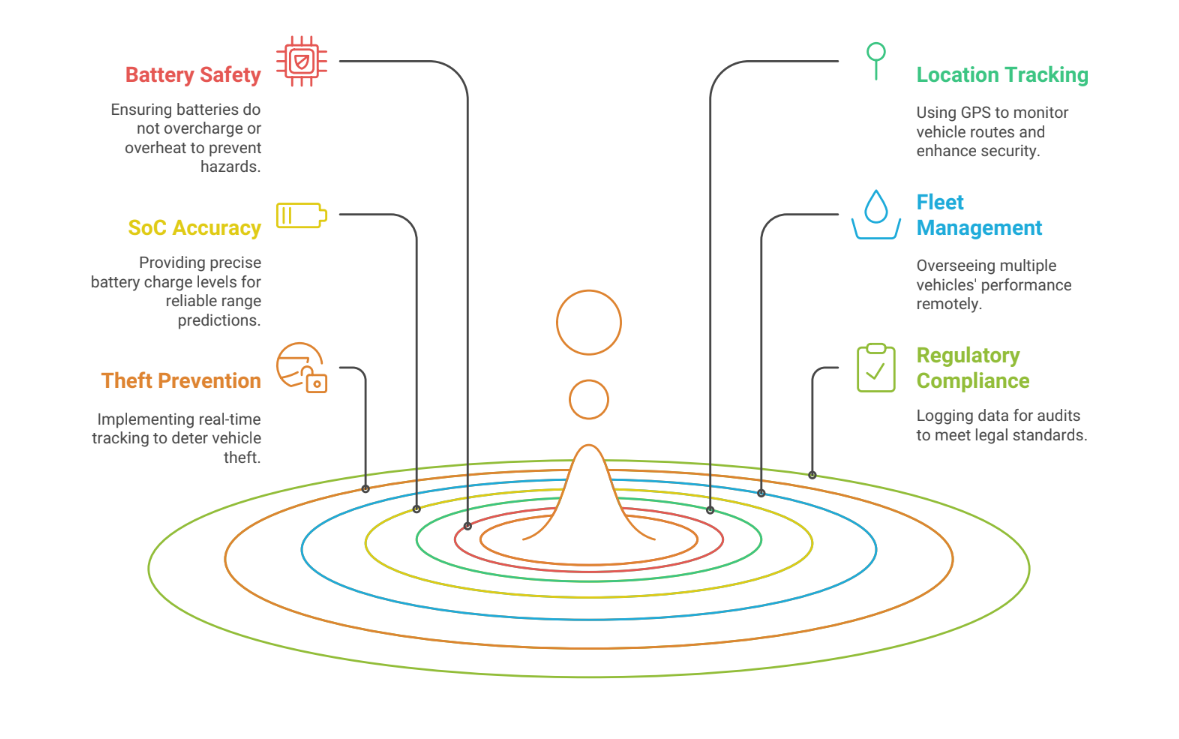
Battery Safety: Prevent overcharging, over-discharging, and thermal runaway.

Location Tracking: Real-time GPS tracking is critical for route optimization and security.

State of Charge (SoC) Accuracy: Inaccurate estimations lead to unreliable range predictions.

Fleet Management: Difficulties in remotely monitoring the performance of multiple vehicles.

Theft Prevention: Need for real-time location tracking to mitigate theft risks.

Regulatory Compliance: Accurate logging of location, battery health, and performance metrics for audits.

Image

IoT-Based Solution

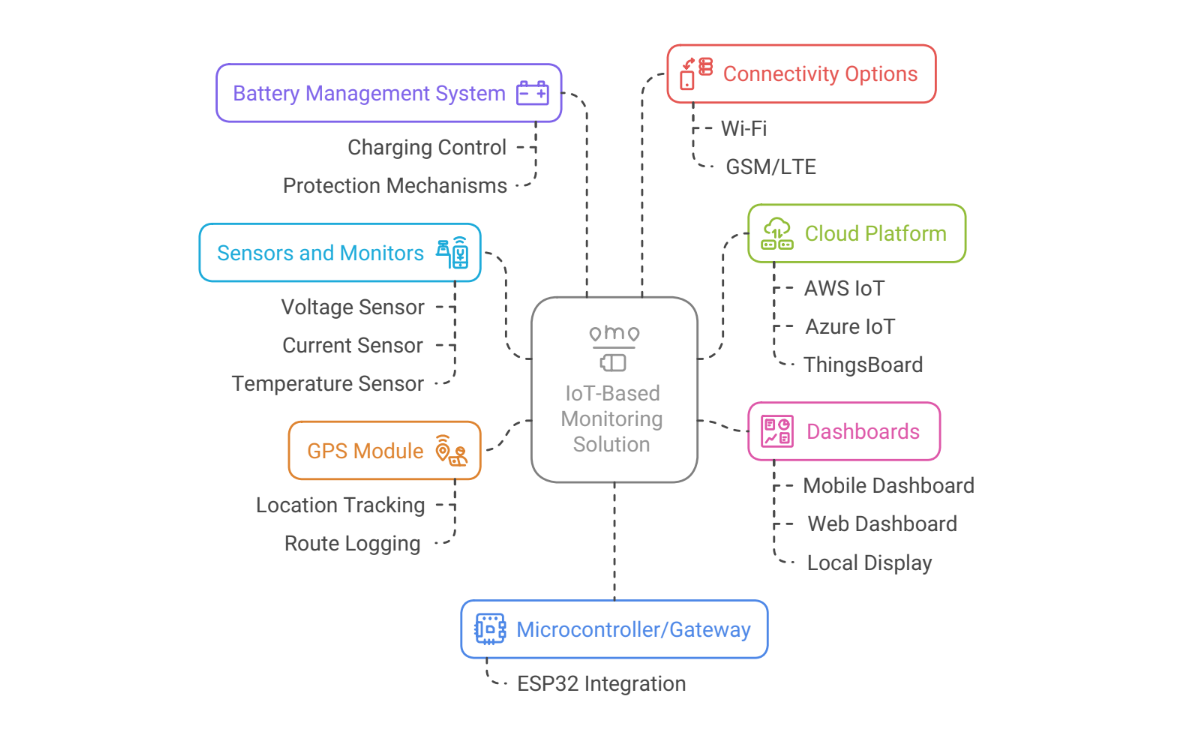
Proposed IoT-Based Monitoring SolutionSystem Components

  • Voltage Sensor: Voltage sensors for precise cell voltage measurement along with ADC.
  • Current Sensor: Current sensors along with ADC used to measure current during charging/discharging.
  • Temperature Sensors: DS18B20 for monitoring battery temperature.

GPS Module (Fig a) for real-time location tracking and route logging.

Controls charging/discharging and protects against overvoltage/current conditions.

ESP32 for integrating sensors, GPS, and IoT connectivity.

  • Wi-Fi or GSM/LTE for real-time data transmission to the cloud.

AWS IoT, Azure IoT, or ThingsBoard for centralized data storage, analytics, and visualization.

  • Real-time visualization of battery metrics, GPS location, and route history.
  • Alerts for critical conditions such as low battery or abnormal vehicle movement.
  • Display Type:
    • OLED or TFT display to show key parameters.
  • Display Data:
    • State of Charge (SoC), range, and location.
Image

Implementation Steps

Sensor and GPS Module Integration

  • Install voltage and current sensors in the battery system for continuous monitoring.
  • Attach the GPS module to the microcontroller for real-time location tracking.

Data Acquisition and Processing

  • Use the microcontroller to gather sensor data and GPS coordinates.
  • Calculate battery metrics, such as:
    • SoC using Coulomb Counting.
    • SoH using voltage and current trends over time.
  • Integrate GPS data to provide real-time vehicle location.

IoT Connectivity and Cloud Integration

  • Transmit battery and location data to the cloud using MQTT protocol.
  • Use secure communication protocols like SSL/TLS for data transmission.

Cloud Dashboard

  • Design an intuitive dashboard to visualize:
    • Battery Metrics: Voltage, current, SoC, SoH, and temperature.
    • GPS Data: Real-time location and historical routes.
  • Implement alerts for:
    • Low battery (<20%).
    • Abnormal current draw (e.g., due to a short circuit).
    • Unauthorized movement or theft detection.

Alert System

  • On-site alerts via the vehicle’s local display.
  • Remote alerts via SMS, email, or app notifications for critical events.

GPS Tracking and Geofencing

  • Use GPS data to track vehicle movement.
  • Define geofencing zones and trigger alerts when the vehicle exits or enters specific areas.

Data Analysis and Predictive Maintenance

  • Analyze historical data to predict battery degradation and schedule maintenance.
  • Use GPS data to optimize routes and reduce energy consumption.

Benefits

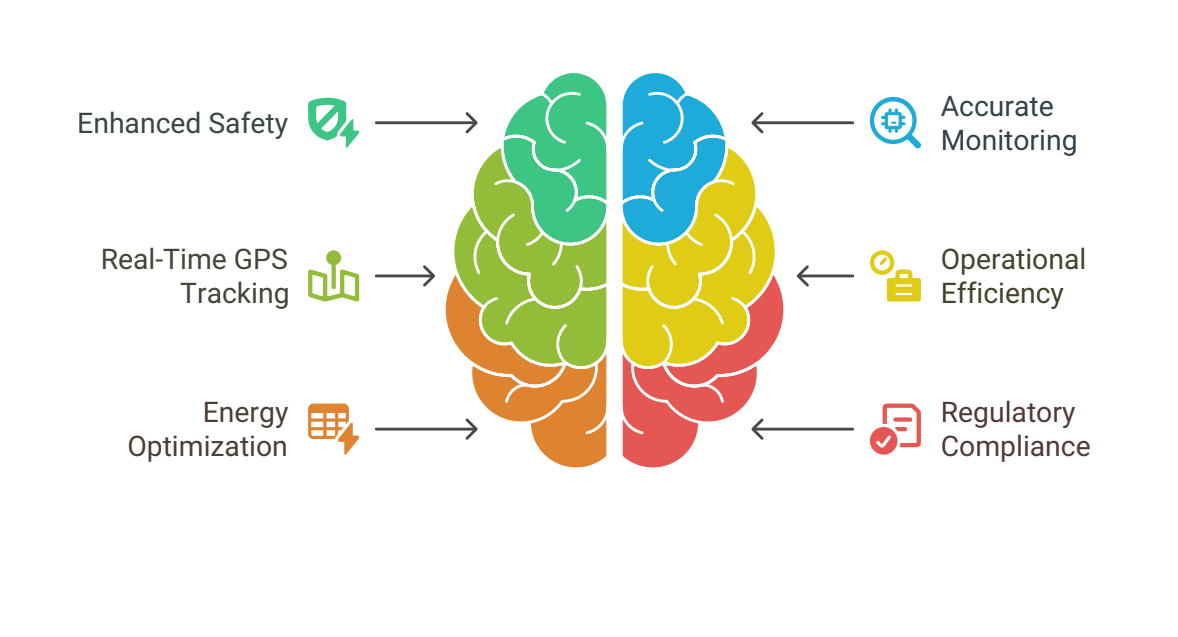
Enhanced Safety

Prevents overcharging, over-discharging, and overheating.

Accurate SoC and SoH Monitoring

Enables better range prediction and battery health assessment.

Real-Time GPS Tracking

Improves fleet management, route optimization, and theft prevention.

Operational Efficiency

Reduces downtime through predictive maintenance.

Energy Optimization

Combines battery and GPS data to optimize energy use based on route conditions.

Regulatory Compliance

Simplifies audits with accurate logs of battery health, performance, and vehicle location.

Image

Results

The integration of battery voltage and current monitoring with GPS tracking ensures comprehensive EVmanagement. By leveraging IoT, real-time insights into battery health and location enhance safety, operationalefficiency, and user satisfaction. This solution is essential for EV manufacturers, fleet operators, and individualusers aiming for cost-effective and reliable performance.